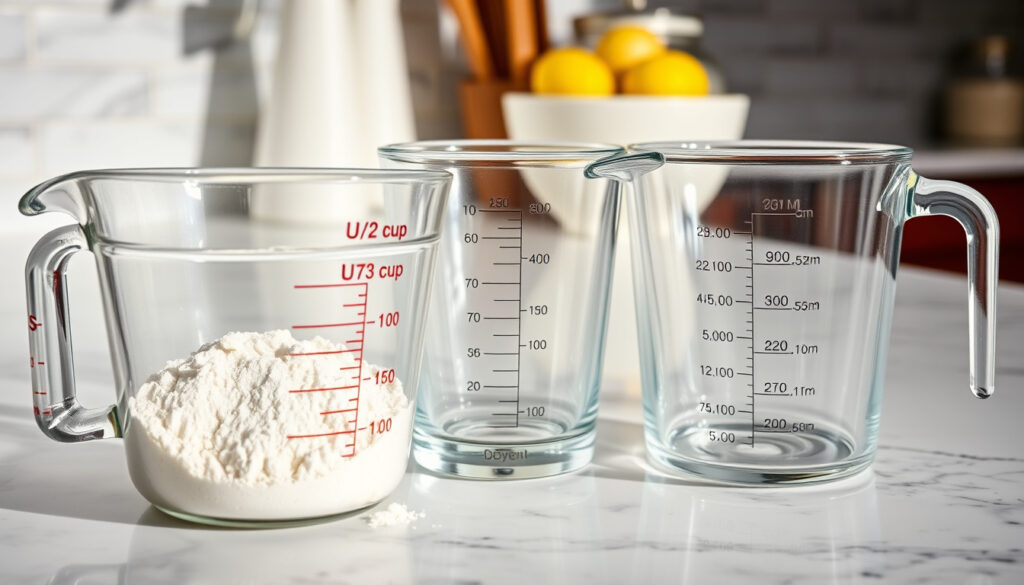
1/2 Cup in mL – US, Metric, UK Conversions Guide
How Many mL in 1/2 Cup? Complete Conversion Guide
A single half-cup measurement sits at the heart of countless recipes worldwide, yet the exact volume it represents depends entirely on which measurement system is in use. In the United States customary system, half a cup equals exactly 118.3 milliliters when calculated from the standard 236.588 mL cup definition. However, recipes frequently round this figure to 120 mL for practical purposes, creating potential discrepancies for those following precise formulations.
The complexity deepens when considering that measurement standards vary significantly across regions. The UK Imperial cup measures 284.131 mL, making its half-cup equivalent 142.1 mL. Meanwhile, the metric cup, commonly used in Australia, Canada, and many other countries, defines half a cup as precisely 125 mL. These differences matter considerably for baking accuracy, where ingredient ratios can make or break a final product.
Understanding which cup standard applies to a particular recipe is therefore essential for achieving intended results. American recipes typically default to US customary measurements, while British, Australian, and international recipes may use metric or Imperial standards. This guide examines each standard in detail, providing conversion tables and practical insights for accurate measurement across all systems.
Quick Conversion Overview
Half a US customary cup equals 118.3 mL, while half a metric cup equals 125 mL and half a UK Imperial cup equals 142.1 mL. Recipe origin determines which standard applies.
- US customary cup derives from the liquid pint, with one cup equaling 8 fluid ounces or 236.588 mL
- US legal cup, used for nutrition labeling by the FDA, defines one cup as exactly 240 mL
- Metric cup, standardized at 250 mL, is used throughout most of Europe, Canada, and Australia
- UK Imperial cup, based on pre-metric British measurements, equals 284.131 mL
- Recipe accuracy improves when matching cup standards to the recipe’s country of origin
- International recipes increasingly specify volumes in milliliters to eliminate ambiguity
- Digital kitchen scales provide the most precise ingredient measurements regardless of cup standard
| Fraction | US Customary | US Legal | Metric | UK Imperial |
|---|---|---|---|---|
| 1/8 cup | 29.6 mL | 30 mL | 31.25 mL | 35.5 mL |
| 1/4 cup | 59.1 mL | 60 mL | 62.5 mL | 71.0 mL |
| 1/3 cup | 78.9 mL | 80 mL | 83.3 mL | 94.7 mL |
| 1/2 cup | 118.3 mL | 120 mL | 125 mL | 142.1 mL |
| 2/3 cup | 157.7 mL | 160 mL | 166.7 mL | 189.4 mL |
| 3/4 cup | 177.4 mL | 180 mL | 187.5 mL | 213.1 mL |
1 Cup in mL and Common Fraction Conversions
Beyond the half-cup measurement, understanding how all common fractions convert across systems proves invaluable when adapting recipes from various sources. A full US customary cup measures 236.6 mL, while the US legal cup standard sits at 240 mL for nutrition labeling purposes. These small differences accumulate significantly when scaling recipes up or down.
1/4 Cup Conversions
One-quarter of a US customary cup yields 59.1 mL, commonly rounded to 60 mL in casual cooking contexts. The metric quarter-cup equals 62.5 mL, and the UK Imperial quarter-cup reaches 71.0 mL. This measurement frequently appears in recipes for small batches of sauces, dressings, and marinades where precision matters less than in baking applications.
1/3 Cup Conversions
The one-third cup fraction presents particular challenges due to its repeating decimal nature. US customary one-third cup equals 78.9 mL, while the metric equivalent measures 83.3 mL. When a recipe calls for one-third cup of an ingredient, using the precise milliliter conversion rather than eyeballing the measurement produces more consistent results.
2/3 Cup Conversions
Two-thirds cup logically doubles the one-third values: 157.7 mL for US customary, 160 mL for US legal, and 166.7 mL for metric. UK Imperial two-thirds cup reaches 189.4 mL. Recipes requiring two-thirds cup often involve larger quantities of liquids or combined dry ingredients.
3/4 Cup Conversions
Three-quarters cup represents the largest common fraction before a full cup. US customary three-quarters cup equals 177.4 mL, while metric three-quarters cup measures 187.5 mL. This fractional measurement frequently appears in baking recipes for elements like butter, sugar, or flour where ingredient proportions significantly affect texture and structure.
When following recipes from unknown origins, identifying the measurement system first improves outcomes considerably. American cookbooks typically use US customary units, while British and Commonwealth recipes often specify metric volumes or weights.
1/2 Cup in Grams and Related Conversions
Volume-to-weight conversions introduce additional complexity because ingredient density determines how many grams fill a given volume. Unlike liquids, where milliliter values remain consistent, dry ingredients vary dramatically. A half-cup of flour weighs considerably less than a half-cup of butter or sugar, despite all occupying the same volume.
Ingredient-Specific Weights
| Ingredient | 1/4 Cup | 1/3 Cup | 1/2 Cup | 3/4 Cup | 1 Cup |
|---|---|---|---|---|---|
| Flour (unsifted) | 30 g | 40 g | 60 g | 90 g | 120 g |
| Flour (sifted) | 27 g | 35 g | 55 g | 82.5 g | 110 g |
| Butter | 57 g | 76 g | 113 g | 170 g | 227 g |
| Sugar (granulated) | 50 g | 67 g | 100 g | 150 g | 200 g |
Baking professionals consistently recommend using weight measurements over volume where possible, as density variations between brands, humidity levels, and measurement techniques introduce significant variables. A kitchen scale measuring in grams or ounces provides the most reproducible results regardless of which cup standard applies to a particular recipe.
The difference between sifted and unsifted flour demonstrates how preparation affects weight measurements. One-half cup of sifted flour weighs 55 grams, while the same volume of unsifted flour reaches 60 grams. This 8% variation compounds in recipes requiring multiple cups of flour, potentially altering dough hydration and final texture.
Ingredient weights can vary 10-20% based on density, packing method, and brand. These conversions assume standard US cup measurements and should be verified for precision baking applications.
US Cup vs UK/Metric Cup Differences
The divergence between US and UK cup measurements stems from fundamentally different historical roots. American customary units derive from colonial British Imperial measurements that were subsequently modified, while the UK retained and later abandoned Imperial standards in favor of metrication. Understanding these origins clarifies why the same fraction yields different milliliter values depending on geographical context.
Key Measurement Standards
US customary cup measurements trace directly to the liquid measures of colonial America, which themselves originated from earlier British systems. The 1964 Weights and Measures Act formally established the US gallon as 231 cubic inches, from which the cup measurement derives mathematically as one-sixteenth of a gallon. This standardization provides consistency across American food packaging, nutrition labeling, and recipe development.
UK Imperial cup measurements existed in British cooking traditions for generations before metrication. The Imperial system defined a pint as 20 fluid ounces, with each ounce slightly larger than its American counterpart. When the UK transitioned to metric measurements officially in the 1970s, many British cooks continued using Imperial cup measurements informally, creating lasting confusion for those attempting to follow older British recipes.
Contemporary British recipes increasingly specify metric volumes (milliliters) or weights (grams), reducing ambiguity for international readers. However, heritage recipes and some traditional British cooking sources still reference Imperial cups, necessitating conversion knowledge for accurate replication.
Understanding Cup Measurement Standards
The cup as a cooking measurement unit lacks formal international standardization, unlike the gram or milliliter, which have precise scientific definitions. Organizations including the National Institute of Standards and Technology define US customary volumes through legal trade standards, while international bodies recognize metriccup standards primarily through regional adoption rather than global consensus.
Recipe developers choose cup sizes based on regional conventions and target audiences. American cookbooks assume US customary cup measurements by default, while international publishers may adapt recipes using metric equivalents. When encountering ambiguous measurements in unfamiliar recipes, cross-referencing with regional measurement standards improves interpretation accuracy.
The United States Department of Agriculture provides official conversion standards for nutrition labeling purposes, establishing the legal cup as exactly 240 milliliters for packaged food calculations. This legal standard differs slightly from the customary recipe cup, though the difference rarely affects home cooking applications significantly.
What We Know for Certain and What Remains Unclear
| Established Information | Areas of Uncertainty |
|---|---|
| US customary cup = 236.588 mL exactly | How individual brands define cup measurements for labeling |
| US legal cup (FDA) = 240 mL exactly | Precise sifting methods affecting flour weights |
| Metric cup = 250 mL | Regional variations within metric-using countries |
| UK Imperial cup = 284.131 mL | How historical recipes converted between systems |
| 1/2 US cup = 118.294 mL mathematically | Actual volume held by specific measuring cup designs |
Key Sources and Expert References
The US customary cup equals 8 fluid ounces, established through the legal definition of the gallon as exactly 231 cubic inches.
Recipe precision requires matching cup standards to the recipe’s origin country, as regional variations produce measurably different results.
The Exploratorium’s food measurement resources provide educational context for understanding these volume relationships, while commercial conversion tools like those at Pro Calculator offer practical conversion utilities. The Cotswold Flour baking conversion guide addresses ingredient-specific weight considerations relevant to home bakers.
Quick Reference and Next Steps
Half a cup converts to 118.3 mL using US customary standards, 120 mL under FDA nutrition labeling rules, 125 mL for metric cups, and 142.1 mL for UK Imperial measurements. Matching the correct standard to recipe origin produces the most accurate results. For baking precision, weight measurements in grams outperform volume measurements.
Those seeking to understand broader liquid measurement relationships may find the guide to How Many Liters in a Gallon useful for additional context. Similarly, international travelers and online shoppers might benefit from consulting a UK to EU Shoe Size Chart when navigating measurement-based purchasing decisions across regions.
Frequently Asked Questions
What is 1/3 cup in milliliters?
One-third US customary cup equals approximately 78.9 mL. The metric equivalent measures 83.3 mL, and the UK Imperial version reaches 94.7 mL.
How many grams is 1/2 cup of flour?
Half a cup of unsifted all-purpose flour weighs approximately 60 grams, while sifted flour of the same volume weighs approximately 55 grams.
What is 1.5 cups in milliliters?
One and one-half US customary cups equal 354.9 mL. The metric equivalent measures 375 mL, and UK Imperial 1.5 cups reach 426.2 mL.
Is 120 mL the same as 1/2 cup?
In many recipe contexts, 120 mL approximates 1/2 cup, particularly when using US legal cup measurements or rounded values. However, the precise US customary 1/2 cup equals 118.3 mL.
How do I convert 1/2 cup to tablespoons?
One US customary cup equals 16 tablespoons, meaning 1/2 cup equals 8 tablespoons. UK Imperial measurements use the same relationship, though the actual volumes differ.
Why do UK and US cup measurements differ?
UK Imperial and US customary systems diverged historically, with the US gallon being defined as 231 cubic inches while UK Imperial retained larger volume standards based on 20 fluid ounces per pint rather than 16.
What is the metric cup value?
The metric cup, used in many countries including Australia, Canada, and much of Europe, equals exactly 250 milliliters, making half a metric cup equal to 125 mL.
More related posts
 Halloween Crafts for Kids – Easy Printable Ideas for 2025
 Half Price Lamb Joint Offers Today – Best Deals at Tesco, Aldi & Sainsburys
 James Martin’s Saturday Morning – Schedule, Guests and Recipes
 Fitness First Baker Street – Hours, Classes and Facilities Guide
 M&S Bra Fitting – Free Appointments, Booking, and Store Locator
 Zawe Ashton – Biography, Age, Husband, and Career Highlights
 BBC Weather Tunbridge Well – Today, Tomorrow & 14-Day Foreca t
 Cricket on TV Today – Full Schedule and Channel Guide