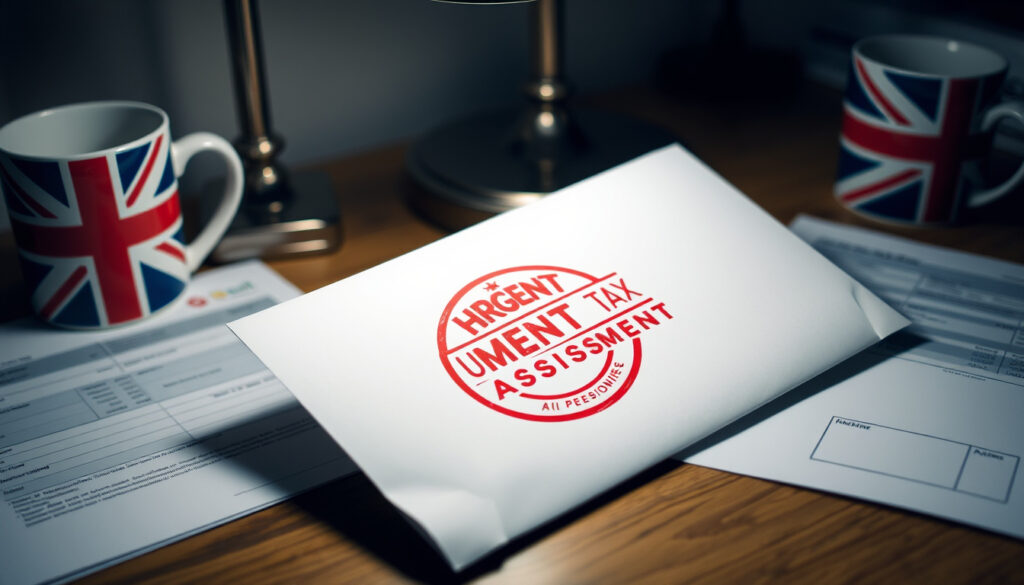
HMRC Sending Assessment Letters to UK Taxpayers and Pensioners – What You Need to Know
HMRC is sending Simple Assessment letters, known as PA302 forms, to hundreds of thousands of UK taxpayers and pensioners. These official documents calculate tax owed on income where tax has not been automatically deducted, such as state pensions exceeding the personal allowance or savings interest. Understanding what these letters mean, whether they are genuine, and what action to take has become increasingly important as HMRC expands this programme.
The letters form part of HMRC’s annual compliance activity, targeting individuals whose tax affairs are straightforward enough for the department to calculate liability directly from data already held. For many recipients, particularly pensioners, these communications may arrive unexpectedly, leading to concerns about their authenticity. This guide explains everything you need to know about Simple Assessment letters and how to respond appropriately.
What is HMRC Simple Assessment?
Simple Assessment is an official tax calculation issued by HMRC when it possesses all the information needed to determine what tax you owe. Unlike Self Assessment, where you file a return yourself, HMRC does the calculations using data received from employers, pension providers, banks, and the Department for Work and Pensions.
The PA302 form is the specific document used for Simple Assessment. It arrives by post and includes a breakdown of your income, tax already paid, allowances applied, and the final amount due. This approach applies to taxpayers with relatively simple financial situations, often replacing the need to complete a full Self Assessment tax return.
Key facts at a glance
HMRC Simple Assessment notices calculating tax due on untaxed income
560,000 taxpayers including 140,000 pensioners received letters in 2024
Letters primarily sent July to August after the tax year ends
Verify authenticity, then pay or query within stated deadlines
Key insights
- Multiple Simple Assessment letters may arrive for the same tax year as HMRC incorporates additional data sources, such as savings interest information
- Pensioners are particularly affected because state pensions do not have tax automatically deducted at source
- HMRC is rolling out more PA302 letters in 2025-26 as part of expanded compliance activity
- The personal allowance for 2025-26 stands at £12,570, meaning state pensions above this threshold trigger a tax calculation
- PA302 letters will include a Unique Taxpayer Reference (UTR) if genuine
- Self Assessment filers may still receive Simple Assessment letters if they meet the criteria
- Over 1.4 million overdue notices were issued in relation to unpaid Simple Assessment amounts
Snapshot facts
| Fact | Details |
|---|---|
| Letters issued (2024) | 560,000 total, including 140,000 pensioners |
| Primary timing | July to August following the tax year end |
| Form used | PA302 for Simple Assessment calculations |
| Payment deadline | 31 January following the tax year |
| Query window | 60 days to challenge before payment becomes due |
| Overdue notices | 1.4 million sent for unpaid amounts |
| 2025-26 personal allowance | £12,570 |
A state pension of £15,000 leaves £2,430 taxable at the basic rate, resulting in approximately £486 in tax due. This is exactly the type of calculation HMRC includes in Simple Assessment letters.
Why have I received a Simple Assessment letter?
You receive a Simple Assessment letter when HMRC determines it has sufficient information to calculate your tax liability without requiring a full Self Assessment return. This typically happens when your untaxed income falls above certain thresholds or when adjustments need to be made to tax already paid through PAYE.
The most common reasons for receiving a PA302 letter include your state pension exceeding the personal allowance, having untaxed private pension income, earning savings interest above your Personal Savings Allowance, or owing additional tax due to PAYE underpayments exceeding £3,000.
State pension and pensioner situations
Pensioners frequently receive Simple Assessment letters because HMRC does not automatically deduct tax from state pension payments. If your state pension exceeds the personal allowance of £12,570 for 2025-26, you will owe tax on the excess amount.
Additional factors that trigger PA302 letters for pensioners include receiving private pension income where tax has not been fully accounted for, having savings accounts that generate interest, or receiving rental income. HMRC uses data from the Department for Work and Pensions and pension providers to compute liability accurately without requiring you to file a tax return.
If your only income is a state pension at or below £12,570, you generally will not receive a Simple Assessment letter. However, if you have other income sources or your state pension exceeds this threshold, checking your PA302 carefully ensures you only pay what is actually owed.
Income types that trigger Simple Assessment
- State pension exceeding the personal allowance
- Private or occupational pensions with untaxed elements
- Savings interest above your Personal Savings Allowance
- Rental income where tax has not been deducted
- PAYE earnings where tax code adjustments created underpayment exceeding £3,000
- Benefits received that are taxable
Comparison with Self Assessment
| Aspect | Simple Assessment (PA302) | Self Assessment |
|---|---|---|
| Who it’s for | Simple affairs, pensioners with untaxed income under threshold | Complex affairs requiring full return |
| Process | HMRC calculates and bills directly | Taxpayer files return independently |
| Data source | Third-party data (employers, banks, DWP) | Self-reported by taxpayer |
| Query window | 60 days to challenge before payment due | Varies by return deadline |
| Paperwork required | None from taxpayer | Full return completion required |
Is my HMRC Simple Assessment letter genuine or fake?
Genuine Simple Assessment letters from HMRC include specific official details that scam letters typically lack. Identifying authentic PA302 letters protects you from fraud while ensuring you do not ignore legitimate tax obligations.
HMRC has confirmed that legitimate Simple Assessment letters include the phone number 0300 322 7835 and direct payments to the account sort code and account number ending with postcode BX9 1GX. These details appear both on PA302 letters and on overdue payment reminders known as IDMS99P communications.
How to verify authenticity
First, check that your letter includes your Unique Taxpayer Reference (UTR) if you have one. Genuine HMRC correspondence will contain accurate personal details, including your name, address, and National Insurance number, that match your records.
Second, examine the income information listed. The figures should reflect income you actually received during the tax year stated. If you see sources or amounts that do not match your records, this warrants further investigation before making any payment.
Third, compare the format and tone against official HMRC communications. Authentic letters use consistent formatting and professional language. The official GOV.UK guidance provides a comprehensive list of genuine HMRC letters that you can cross-reference.
Scam letters often mimic the appearance of official HMRC communications but typically lack the specific details that legitimate letters contain. They may request immediate payment via unusual methods, threaten immediate legal action, or include spelling and formatting errors. When in doubt, contact HMRC directly using the official number rather than any number provided in the suspicious letter.
HMRC’s official guidance confirms that verification of genuine letters should focus on checking for proper HMRC branding, accurate personal information, and official payment references. The Low Income Tax Reform Group, a tax charity, also advises against ignoring Simple Assessment letters regardless of whether you believe they may be erroneous.
Red flags indicating potential scams
- Requests for payment via gift cards, cryptocurrency, or unusual methods
- Threats of immediate arrest or legal proceedings within hours
- Email addresses or phone numbers that do not match official HMRC contact details
- Generic greetings without your name or incorrect personal information
- Links to websites that do not end in gov.uk
How do I contact HMRC about Simple Assessment?
If you need to query a Simple Assessment letter, contact HMRC within the 60-day window available before payment becomes due. There are several ways to get in touch, each suited to different types of inquiry.
Phone contact
The official phone number for Simple Assessment enquiries is 0300 322 7835. This number appears on genuine PA302 letters and overdue notices. HMRC advisors can help with questions about the calculation, disputes about income amounts, or requests for replacement letters if you have lost the original.
Phone lines are typically available Monday to Friday, though waiting times may vary depending on demand. Having your UTR and National Insurance number ready will help the process move more smoothly when you call.
Online options
You can manage aspects of your Simple Assessment through your personal tax account on GOV.UK. This allows you to view your calculation, check payment status, and update contact details. For disputes or complex queries, you may still need to speak with an adviser by phone.
Written correspondence
If you prefer written communication, you can write to HMRC directly. Include your UTR, the tax year in question, and a clear explanation of your query or dispute. Keep copies of all correspondence and consider using recorded delivery for important documents.
If you disagree with your Simple Assessment, you must contact HMRC within 60 days of receiving the letter. After this window, HMRC expects payment, and challenging the calculation becomes significantly more difficult. Do not delay if you believe there is an error in your assessment.
What to do if you disagree with the calculation
- Contact HMRC within 60 days of receiving your PA302 letter
- Explain clearly what information you believe is incorrect
- Provide supporting evidence such as pension statements or bank interest certificates
- Request a revised calculation if applicable
- Keep records of all correspondence and reference numbers
Timeline of Simple Assessment communications
Understanding when Simple Assessment letters typically arrive helps you recognise what to expect and when deadlines apply. The process follows a reasonably predictable annual cycle.
- 5 April – End of tax year; HMRC begins processing data received from employers, banks, pension providers, and DWP
- May to June – HMRC finalises calculations for Simple Assessment cases
- July to August – Majority of PA302 letters sent to approximately 560,000 taxpayers in 2024
- August 2024 – HMRC published dedicated guide for pensioners receiving Simple Assessment letters
- Autumn 2024 – Additional letters may follow as HMRC incorporates further data such as savings interest
- January 2026 – Payment deadline for 2024-25 tax year Simple Assessment amounts
- January 2027 – Payment deadline for 2025-26 tax year Simple Assessment amounts
- 2025 onwards – HMRC continuing to expand Simple Assessment programme to cover more straightforward tax cases
It is worth noting that multiple letters for the same tax year are possible. As reported by the Association of Taxation Technicians, taxpayers may receive separate communications as HMRC processes different types of income data at different times. This particularly affects those with savings interest, as banks report this information to HMRC after the initial batch of letters has been sent. For more details on HMRC’s assessment letters, you can refer to the Rebekah Vardy biography.
What is confirmed and what remains unclear
While the basic mechanics of Simple Assessment are well established, certain details vary by individual circumstance. Knowing which information is certain and which requires personal verification helps you assess your own situation accurately.
| Established information | Information requiring individual verification |
|---|---|
| PA302 letters are genuine HMRC documents | Whether your specific income amounts are correct |
| The personal allowance is £12,570 for 2025-26 | Your exact tax liability based on your complete income picture |
| 60 days is the standard query window | Whether you have any special circumstances affecting your calculation |
| 31 January is the payment deadline | If HMRC holds accurate contact details for you |
| State pension is not taxed at source | If your pension provider has given HMRC correct information |
| 0300 322 7835 is the official helpline | Whether you may have grounds to dispute or appeal |
| Over 1.4 million overdue notices have been issued | The exact timing of any follow-up letters |
The wider context of HMRC compliance activity
Simple Assessment letters form part of HMRC’s broader strategy to ensure taxpayers pay the correct amount of tax. The programme targets individuals with straightforward financial situations where the department can accurately calculate liability using data already held, reducing the administrative burden on both HMRC and taxpayers.
The expansion of Simple Assessment reflects HMRC’s increasing ability to collect and cross-reference data from multiple sources. Banks provide savings interest information, employers report PAYE data, pension providers submit details of retirement income, and DWP supplies state pension figures. This combined data picture allows HMRC to identify underpayments that would previously have required Self Assessment to correct.
Pensioners represent a significant portion of Simple Assessment recipients for several reasons. Many retired individuals have multiple income sources including state pension, private pension, and savings interest, creating complex tax situations. Additionally, the shift towards taxation of state pension through the mechanism of a Personal Allowance rather than automatic deduction means more pensioners need to understand their tax position.
The programme also serves as a deterrent against non-compliance. Knowing that HMRC can automatically calculate and pursue underpayments encourages accurate reporting and timely payment. For those experiencing financial hardship, contacting HMRC promptly allows exploration of payment options before penalties accrue.
Official sources and key quotes
“HMRC is sending simple assessment letters to about 560,000 taxpayers, including around 140,000 pensioners.”
— Low Income Tax Reform Group, citing HMRC data
“Check if a letter you’ve received from HMRC is genuine by verifying the sender’s details against official records and contacting HMRC directly if you have any doubts.”
— GOV.UK guidance
The Low Income Tax Reform Group advises against ignoring Simple Assessment letters, noting that doing so can lead to penalties and additional charges. Their guidance emphasises that even if you believe there is an error in the calculation, responding promptly protects your position and allows time for the matter to be resolved.
HMRC’s own guide for pensioners explains the Simple Assessment process in accessible language, covering why letters are sent, what they contain, and how to respond. This publication reflects HMRC’s commitment to supporting taxpayers in understanding their obligations.
Accountancy firms have also noted the increase in Simple Assessment activity. Ross Martin Chartered Accountants reports that HMRC is rolling out more PA302 letters for straightforward cases during 2025-26, suggesting the programme will continue to expand and affect more taxpayers.
Summary and next steps
HMRC Simple Assessment letters represent an official calculation of tax owed on income where tax has not been automatically deducted. The PA302 form is a genuine government document sent to hundreds of thousands of taxpayers, particularly pensioners whose state pension exceeds the personal allowance. These letters are legitimate and should not be ignored, though verifying their accuracy remains important.
If you receive a Simple Assessment letter, check that the income details are correct, verify the payment deadline, and contact HMRC within 60 days if you believe there is an error. Payment can be made online or by bank transfer using the reference provided on the letter. Instalment arrangements are available if you cannot pay the full amount by the deadline, provided the amount will be cleared in time.
For further guidance on managing tax affairs and government payments, see our article on Cost of Living Payment When Will It Be Paid – 2026 DWP Update. Those concerned about future financial planning may also find our Martin Lewis Power of Attorney – More Important Than a Will article helpful for understanding how to protect your financial interests.
Frequently asked questions
Why did I receive a Simple Assessment letter when I have never filed a tax return?
You do not need to file a Self Assessment return to receive a Simple Assessment letter. HMRC sends PA302 forms to taxpayers with straightforward affairs when it has all the information needed to calculate tax due directly from third-party data sources such as employers, pension providers, and banks.
What happens if I do not pay my Simple Assessment by the deadline?
Missing the payment deadline can result in penalties and interest charges. HMRC sends overdue reminders (IDMS99P letters) allowing 28 days to pay or contact them. Persistent non-payment may lead to further enforcement action.
Can I pay my Simple Assessment in instalments?
Yes, instalments are available provided the total amount owed will be cleared by the deadline of 31 January following the tax year. Contact HMRC to arrange a payment plan that suits your circumstances.
I am a pensioner on a fixed income. What help is available?
If paying the full amount would cause financial hardship, contact HMRC’s helpline on 0300 322 7835 to discuss your options. They may be able to arrange an extended payment timeline or direct you to additional support resources.
My Simple Assessment includes income I did not receive. What should I do?
Contact HMRC within 60 days of receiving the letter and explain the discrepancy. Provide evidence such as bank statements or pension statements to support your claim. HMRC will review the information and issue a revised calculation if appropriate.
I have already filed a Self Assessment return. Why did I receive a Simple Assessment letter?
If you meet the criteria for Simple Assessment, HMRC may issue a PA302 letter even if you have submitted a Self Assessment return. This can happen when HMRC’s calculation differs from your return or when additional income data becomes available after your return was filed.
How do I request a replacement Simple Assessment letter?
If you have lost or not received your PA302 letter, contact HMRC on 0300 322 7835 to request a replacement. You will need to provide identification details to verify your account.
Are Simple Assessment letters sent every year?
Simple Assessment letters are sent when HMRC determines you owe tax on untaxed income for a particular tax year. It is not an annual communication unless you have ongoing tax adjustments. Some taxpayers receive letters for multiple years if their circumstances continue to generate underpayment.
What information must a genuine HMRC letter contain?
Genuine HMRC letters include accurate personal details (name, address, National Insurance number), your Unique Taxpayer Reference if applicable, official phone number (0300 322 7835), and payment references to the account ending BX9 1GX.
Can I appeal against my Simple Assessment?
Yes, if you believe the calculation is incorrect, contact HMRC within 60 days of receiving the letter to query or appeal. Provide evidence supporting your position. If you are unhappy with HMRC’s response, you can escalate to the Independent Review Office.
More related posts
 Most Viewed YouTube Video – Current Leader and Top All-Time Lists
 When Is World Book Day 2025 – UK and International Dates
 Ken Dadd Allstate Insurance – Trusted Agent in NJ and NC
 Lizzo About Damn Time – Lyrics Release Date Chords and Video
 Brydon Carse – Full Profile, Stats and Betting Ban
 Gordon Ramsay Restaurants London – Full List, Locations and Booking Guide
 Healthy BMI for Women – Ranges, Charts and Age Guide
 Denver Nuggets vs OKC Thunder Match Player Stats – Box Score & Breakdown