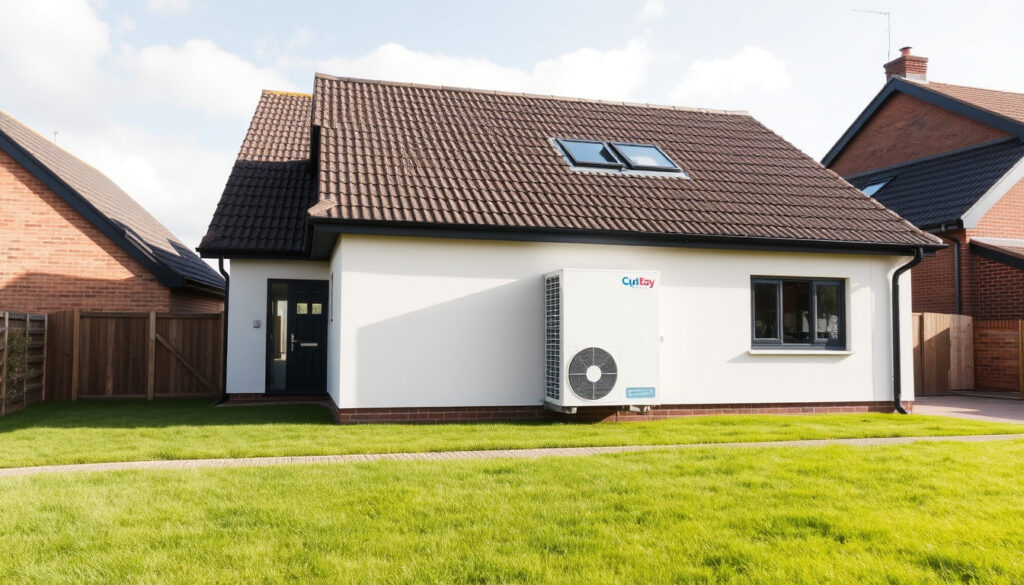
Air Source Heat Pumps – Essential UK Guide 2025
Homeowners across the United Kingdom are increasingly looking at air source heat pumps as an alternative to gas boilers and oil heating. This technology extracts heat from outside air, uses it to warm your home and water, and can significantly cut carbon emissions. But the decision to install one involves weighing higher upfront costs, potential home upgrades, and performance that depends on installation quality and electricity prices. This guide lays out the facts, costs, benefits, drawbacks, and UK-specific considerations to help you make an informed choice.
Based on information from CB Heating, E.ON Next, and the HomeOwners Alliance, air source heat pumps are becoming a common low-carbon heating solution across the UK. The key trade-offs are clear: you pay more up front, but you may save on emissions and future energy costs, provided your home is suitable and well insulated.
How Does an Air Source Heat Pump Work?
A device that extracts heat from outside air to heat your home and water. Works like a refrigerator in reverse.
Typically £7,000–£13,000 installed in the UK (2025 prices), with government grants of up to £7,500 available.
Lower carbon emissions, potential savings on heating bills, eligible for Boiler Upgrade Scheme, long lifespan (15–20 years).
High upfront cost, may need home insulation upgrades, can be less efficient in very cold weather, some noise from the outdoor unit.
Key insights about air source heat pumps
- Air source heat pumps are 2–4 times more efficient than electric resistance heating, but performance depends on outdoor temperature and system design.
- In the UK, the Boiler Upgrade Scheme offers grants that can reduce installation cost by up to £7,500 (subject to eligibility).
- Noise levels have dropped significantly in modern units (<40 dB at 1m from compressor), but placement still matters.
- Most UK homes can benefit from an air source heat pump, but older, poorly insulated properties may require additional upgrades.
- Annual running costs can be lower than gas boilers if the home is well insulated and electricity prices remain competitive.
| Parameter | Value |
|---|---|
| Efficiency (COP) | 2.5–4.0 (for every 1 kWh electricity, 2.5–4 kWh heat produced) |
| Lifespan | 15–20 years with proper maintenance (annual servicing) |
| Typical installation cost (UK) | £7,000–£13,000 |
| Annual savings vs gas boiler | £200–£500 (depends on electricity/gas prices) |
| Noise level (modern units) | 35–50 dB (similar to a quiet refrigerator) |
| Space requirement | Outdoor unit needs good air flow; indoor unit size of a small fridge |
| UK grant (England & Wales) | Boiler Upgrade Scheme: £7,500 (2024–2028) |
How Much Do Air Source Heat Pumps Cost?
Installation costs in 2025
Installing an air source heat pump involves the unit itself, labour, and often supplementary work such as upgrading radiators or adding a hot water cylinder. According to the Renewable Energy Hub, a typical purchase-and-install range is £8,000–£16,000, with advanced models reaching £20,000. The HomeOwners Alliance cites the UK government figure of £12,500 installed, while E.ON Next estimates about £12,000 for a three‑bedroom detached home.
Government grants available
The Boiler Upgrade Scheme provides a £7,500 grant for eligible air source heat pump installations in England and Wales. Scotland offers different support through Home Energy Scotland loans, and Northern Ireland also has separate schemes. Importantly, hybrid systems (heat pump combined with a boiler) are not eligible for the £7,500 grant, according to the HomeOwners Alliance.
With the £7,500 Boiler Upgrade Scheme grant, a homeowner paying the government reference price of £12,500 would be left with a net cost of about £5,000. Eligibility requires a suitable home, an accredited installer, and installation in England or Wales.
Are running costs always lower?
One important point raised by the Renewable Energy Hub is that running costs may not always be lower than a modern gas boiler, because gas per unit can be cheaper than electricity. Actual savings depend on your home’s insulation, the heat pump’s efficiency, and your electricity tariff.
What Are the Pros and Cons of Air Source Heat Pumps?
Main advantages
- Lower emissions: Heat pumps reduce direct on-site fossil fuel use and can cut carbon footprints compared with gas boilers (E.ON Next).
- High efficiency: They can deliver several units of heat for each unit of electricity used (CB Heating, E.ON Next).
- Heating and hot water: They can heat rooms and provide domestic hot water (HomeOwners Alliance, E.ON Next).
- Eligible for grants: Support can materially reduce the upfront cost (HomeOwners Alliance, E.ON Next).
Main disadvantages
- High upfront cost: Installation remains expensive even after grants (multiple sources).
- May need home improvements: Some homes require insulation upgrades or larger radiators to work well (Renewable Energy Hub).
- Noise and outdoor space: The outdoor unit can be audible, and you need somewhere suitable to place it (Renewable Energy Hub, E.ON Next).
- Running costs vary: They depend heavily on electricity tariff, system design, and controls (Renewable Energy Hub, E.ON Next).
- Not always cheaper than gas: If replacing a modern gas boiler, savings may be limited because gas can be cheaper per unit (Renewable Energy Hub).
Air source heat pumps typically have a Coefficient of Performance (COP) of 2.5–4.0. That means for every 1 kWh of electricity, they produce 2.5–4 kWh of heat. Real-world savings depend on your home’s fabric and the system’s design; well-insulated homes with low‑temperature heating (underfloor or large radiators) see the best returns.
Air Source Heat Pumps in the UK – What You Need to Know
Do they work in UK weather?
The UK’s climate is generally mild, rarely dropping below -10°C. Multiple sources confirm that modern air source heat pumps can extract heat from outdoor air at temperatures as low as -20°C, though efficiency drops below -10°C. The Renewable Energy Hub notes that heat pumps are designed to run for longer periods at lower temperatures rather than rapidly boosting a cold house, so they work best when left at a steady temperature.
Suitability for older homes
Older UK properties (especially pre‑1930) often have smaller radiators and less insulation. A detailed heat loss assessment is necessary; many older homes will need upgraded radiators or underfloor heating to reach comfortable temperatures. The Renewable Energy Hub states that heat pumps tend to perform best in well-insulated homes with low‑temperature heating systems.
Noise and planning permission
Modern units produce noise levels of 35–50 dB, comparable to a quiet refrigerator. Placement is important: keeping the unit away from bedrooms and neighbours’ boundaries helps. In most cases, air source heat pumps are permitted development, but it is advisable to check local planning rules, especially in conservation areas.
Not all homes are ideal candidates. If your home has poor insulation or uses small, high-temperature radiators, you may need significant upgrades before a heat pump can work efficiently. Always have a professional heat loss survey before committing.
Evolution of Air Source Heat Pumps (Key Milestones)
- 1852 – Lord Kelvin describes the heat pump concept.
- 1940s – First residential heat pumps developed in the US.
- 1970s – Oil crisis sparks interest in heat pumps; early models have low efficiency.
- 1990s – Scroll compressors and improved refrigerants boost COP to 3+.
- 2000s – Air source heat pumps gain traction in Europe; noise reduction becomes priority.
- 2010s – Inverter technology provides variable speed operation; COP reaches 4+.
- 2020s – UK government introduces Boiler Upgrade Scheme; heat pump sales surge.
- 2025 – Latest models operate at -25°C; typical noise below 40 dB; smart grid integration.
What Is Certain and What Remains Uncertain?
Established information
- Air source heat pumps can provide all heating and hot water for a well-insulated home in UK climates.
- They are significantly more efficient than electric resistance heaters or oil boilers.
- Noise levels have decreased with modern units, but some low hum is normal.
- Government grants are available in the UK (Boiler Upgrade Scheme) until at least 2028.
Information that remains unclear
- Actual efficiency (COP) varies with outdoor temperature – below -10°C efficiency drops significantly (some models still deliver COP ~2).
- Payback period (savings vs upfront cost) depends heavily on future energy prices; range 7–15 years.
- Lifespan of 15–20 years depends on installation quality and maintenance; some units fail earlier.
- Suitability for older homes (pre‑1930) requires detailed heat loss assessment – not all homes are good candidates.
- The exact noise level (dB) depends on distance, unit model, and installation (ground isolation).
How Do Air Source Heat Pumps Compare to Other Heating Systems?
Air source heat pumps are generally cheaper to install than ground source heat pumps, which require land excavation. Their running costs are lower than oil or LPG boilers, and they produce fewer CO₂ emissions per kWh. Compared with gas boilers, they are noisier but much cleaner. In the UK, they are increasingly seen as a primary replacement for gas heating under net‑zero targets.
The UK’s mild climate is suitable for air source heat pumps, though many homes have smaller radiators designed for high‑temperature gas boilers. Larger radiators or underfloor heating may be needed for optimal performance. The Boiler Upgrade Scheme (£7,500 grant) significantly improves cost competitiveness.
Looking ahead, the proposed ban on new gas boiler installations in UK homes from 2035 will accelerate heat pump adoption. Ongoing improvements in refrigerants and inverter technology could push COP closer to 5, and increasing installer competition may reduce prices by 20–30% within five years.
What Do the Experts Say?
“An air-source heat pump can deliver up to two to four times more heat energy to a home than the electrical energy it consumes.”
— Energy.gov (US Department of Energy)
“Modern air source heat pumps are designed to operate efficiently in UK winters. Most ASHP’s can continue to extract heat from the air at temperatures as low as -15°C.”
— Renewable Energy Hub (Dec 2025)
“Cut carbon emissions with EDF Heat Pumps, a Which? Trusted Trader.”
— EDF Energy Guide (2026)
The Bottom Line on Air Source Heat Pumps
Air source heat pumps are a proven low‑carbon heating technology that makes sense for many UK homes, especially those that are well insulated and suited to lower‑temperature heating. The high upfront cost is partly offset by the Boiler Upgrade Scheme grant of £7,500, and running costs can be lower than oil or LPG, though not always cheaper than gas. If you are considering a heat pump, start with a professional heat loss survey and compare installation quotes from accredited installers. For broader context on managing your household finances, see our article on Cost of Living Payment – When Will It Be Paid?.
Frequently Asked Questions
Are air source heat pumps any good?
Yes, for most well-insulated homes in the UK they provide efficient low-carbon heating. They work best with underfloor heating or large radiators and have lower running costs than oil or LPG.
Do air source heat pumps need maintenance?
Annual servicing is recommended (similar to a boiler) to clean filters, check refrigerant levels, and inspect the outdoor unit.
Can an air source heat pump replace a gas boiler entirely?
Yes, but you may need to upgrade radiators or install underfloor heating. The heat pump can provide both heating and hot water, often with an integrated tank.
What size air source heat pump do I need?
A professional heat loss calculation determines size. Typical UK homes (3‑bed) need 5–8 kW units.
How long does an air source heat pump last?
15–20 years with proper maintenance. The outdoor unit may need replacement sooner in coastal areas due to salt air.
Are air source heat pumps noisy?
Modern units produce 35–50 dB, similar to a quiet refrigerator. Proper placement away from bedrooms and neighbours helps reduce noise impact.
What is the Boiler Upgrade Scheme?
It is a UK government grant of £7,500 for air source heat pump installations in England and Wales, available until at least 2028. Hybrid systems are not eligible.
Do I need planning permission for an air source heat pump?
In most cases they are permitted development, but check with your local council, especially in conservation areas or listed buildings.
Can a heat pump provide cooling?
Some air source heat pump models can reverse the cycle to provide air conditioning in summer, though this is less common in UK installations.
What are the best brands in the UK?
Common brands include Mitsubishi, Daikin, Vaillant, Samsung, and Panasonic. Choose an MCS‑accredited installer who can recommend a model suited to your home.
For further reading on legal and financial matters that may affect your household planning, see Martin Lewis Power of Attorney – More Important Than a Will.
More related posts
 iPad Pro 11-inch – UK Prices, Models and Buying Guide
 Sports Direct Returns Policy – Complete 2024 Guide
 I Have No Photo Id What Can I Use Uk – Free & Fast Alternatives
 Check If Vehicle Is Taxed – Free GOV.UK Guide
 Antony Armstrong-Jones – Photographer Who Married Royalty
 Donna Reed – Cause of Death, Marriages, and Hollywood Legacy
 Vasco da Gama FC – History, Achievements and Rivalries
 Sadiq Khan – Net Worth, Wife, Palantir & Biography